
I’ve been to many places in the world, and I’ve given talks in lots of places in the world, and in many of these places, the language that they spoke there was different than English. I’m limited to English so the circumstances made it necessary to have a translator, someone who could take the words I use in English, and put them into the words of whatever the local language was.
My teacher, Muhammad Rahim Bawa Muhaiyaddeen, did not speak English; he spoke Tamil, a language of southern India. And his communication to us in the United States was also through a translator. People would take the Tamil and put it into English so that we can understand it. And I was thinking; isn’t it amazing with all these languages all over the world, the words are similar? They just sound different. We make different noises. Just like we have different alphabets to help us pronounce these noises, we make different noises. But the noises all point at the same things. I mean; there’s a word for house in English, and then there’s a word for house in German, and there’s a word for house in French, and a word for house in Turkish, and a word for house in Tamil; but there are translations of these words.
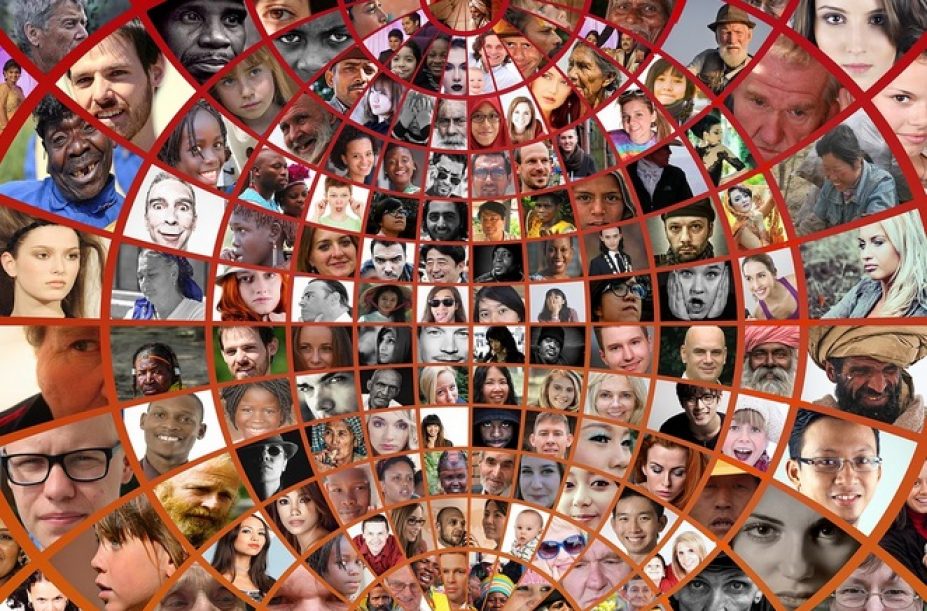
So even though things appear on the outside to be quite different, once you get to the inside they’re really quite the same and meanings are the same. Now, different societies have entirely different looks to them. If you travel to the Amazon, the familial society is going to look different than if you travel to Mongolia. And the look in Mongolia is going to be different than the look in China. And what you see in China is going to be different than what you see in the US, and as you travel through various parts of the US, you’re also going to see different external visions that represent what’s going on in society.
Now you would think that since we can translate other languages into our language that those of us speaking the same language would be able to communicate easily. And the truth is that it ain’t necessarily so. The fact that we all speak the same language has nothing to do with the point that we may, or may not, understand each other.
Language can be used to hide just as easily as it can be used to communicate, and whether or not we choose to use language to hide, or choose language to communicate, is a personal decision that we make. And it has to do with whether or not we want to create an experience of empathy with other people, or we wish to separate ourselves from other people. It’s very easy to use language to push people away in the same way that it’s very easy to try to use language to bring people closer. We all know how to push people away and we all know how to bring people closer. If you run around accusing everybody of being a kafir, a non-believer, you’re going to be pushing people away. But the Prophet said, “If you call someone else a kafir, you are the kafir.” That’s hadith.
There’s an understanding of things that’s on a higher level, and an understanding of things that’s on a lower level. On one level your head will tell you, “Ha-ha-ha I called him a kafir, I’m finished with him now.” But on a higher level what are the implications of calling someone a kafir for myself, what does that make me? Who am I now and what have I done to the integrity and dignity of my own being? Most people don’t get to the point of considering the integrity and dignity of their own being. If they did, they wouldn’t run around calling people kafir. They would speak to people in a different way…